
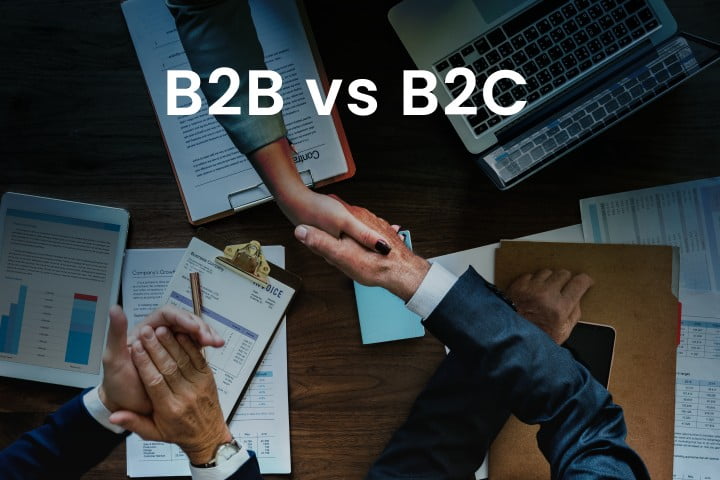
Marketing is not one-size-fits-all. The way a company markets to another business differs significantly from how it markets to individual consumers. Understanding these differences is essential for crafting effective strategies, improving conversions, and building long-term relationships.
This article explores the key differences between B2B (Business-to-Business) and B2C (Business-to-Consumer) marketing, helping you choose the right approach for your goals.
What is B2B Marketing?
B2B marketing refers to the process of selling products or services from one business to another. These transactions often involve multiple decision-makers, longer sales cycles, and higher-value deals.
Key Characteristics of B2B Marketing:
- Focuses on logic, efficiency, and ROI
- Involves long-term relationships
- Requires detailed information and data
- Targets specific industries or organizations
Example: A software company selling CRM tools to enterprises.
What is B2C Marketing?
B2C marketing targets individual consumers who purchase products or services for personal use. It typically involves shorter buying cycles and emotional decision-making.
Key Characteristics of B2C Marketing:
- Focuses on emotions, convenience, and experience
- Targets mass audiences
- Uses simple messaging
- Emphasizes quick decision-making
Example: An online store selling clothing directly to customers.
Key Differences Between B2B and B2C Marketing
1. Target Audience
B2B:
- Businesses, organizations, professionals
- Multiple stakeholders involved
B2C:
- Individual consumers
- Single decision-maker
👉 Insight: B2B audiences are niche, while B2C audiences are broader.
2. Decision-Making Process
B2B:
- Rational and data-driven
- Longer approval processes
- Requires justification and ROI analysis
B2C:
- Emotional and impulse-driven
- Faster decisions
- Influenced by brand perception
3. Sales Cycle
B2B:
- Long sales cycles (weeks to months)
- Multiple touchpoints (emails, demos, meetings)
B2C:
- Short sales cycles (minutes to days)
- Fewer interactions before purchase
4. Content Strategy
B2B Content:
- Whitepapers
- Case studies
- Webinars
- Industry reports
B2C Content:
- Social media posts
- Videos and ads
- Influencer collaborations
- Product descriptions
👉 Key Difference: B2B content educates, while B2C content persuades.
5. Marketing Channels
B2B Channels:
- Email marketing
- Industry events
- Professional networks
B2C Channels:
- TikTok
- Search ads
6. Relationship Building
B2B:
- Long-term partnerships
- High customer retention focus
- Personalized communication
B2C:
- Transaction-focused (but loyalty matters)
- Brand experience plays a major role
7. Pricing and Value
B2B:
- High-value transactions
- Negotiated pricing
- Focus on long-term value
B2C:
- Fixed pricing
- Lower individual transaction value
- Focus on immediate satisfaction
Similarities Between B2B and B2C Marketing
Despite their differences, both share common foundations:
- Customer-centric approach
- Brand trust is critical
- Digital marketing plays a key role
- Data and analytics drive decisions
Which Strategy is Better?
There’s no “better” option—only what fits your business model.
- Choose B2B marketing if your audience is businesses and requires detailed solutions.
- Choose B2C marketing if you’re targeting everyday consumers with quick buying decisions.
Many modern companies adopt a hybrid approach, blending both strategies depending on the product line.
Common Mistakes to Avoid
- Treating B2B like B2C (oversimplifying complex products)
- Ignoring emotional triggers in B2B marketing
- Overcomplicating B2C messaging
- Not aligning content with buyer intent
- Failing to nurture leads in B2B campaigns
Conclusion
B2B and B2C marketing differ in audience, messaging, and execution, but both aim to influence purchasing decisions. The key lies in understanding your audience deeply and tailoring your approach accordingly.
Businesses that adapt their strategies to these differences tend to achieve higher engagement, stronger relationships, and better ROI.
FAQs
1. What is the biggest difference between B2B and B2C marketing?
The biggest difference lies in the decision-making process—B2B is logic-driven and complex, while B2C is emotion-driven and faster.
2. Is digital marketing important for both B2B and B2C?
Yes, digital channels like social media, SEO, and email marketing are essential for both, though platforms and strategies differ.
3. Can a company use both B2B and B2C marketing?
Yes, many companies operate in both spaces and tailor strategies based on the target audience.
4. Why is the B2B sales cycle longer?
Because it involves multiple stakeholders, approvals, and higher financial risk, requiring more research and evaluation.
5. What type of content works best for B2B marketing?
Educational and data-driven content such as case studies, whitepapers, and webinars works best.
6. How important is branding in B2C marketing?
Branding is crucial in B2C because consumers often make decisions based on perception and emotional connection.
7. Do emotions play a role in B2B marketing?
Yes, although B2B is logic-driven, emotions like trust, credibility, and confidence still influence decisions.
